Superconductor critical-temperature regression
Can composition-derived features predict the critical temperature of known superconductors?
Self-directed study
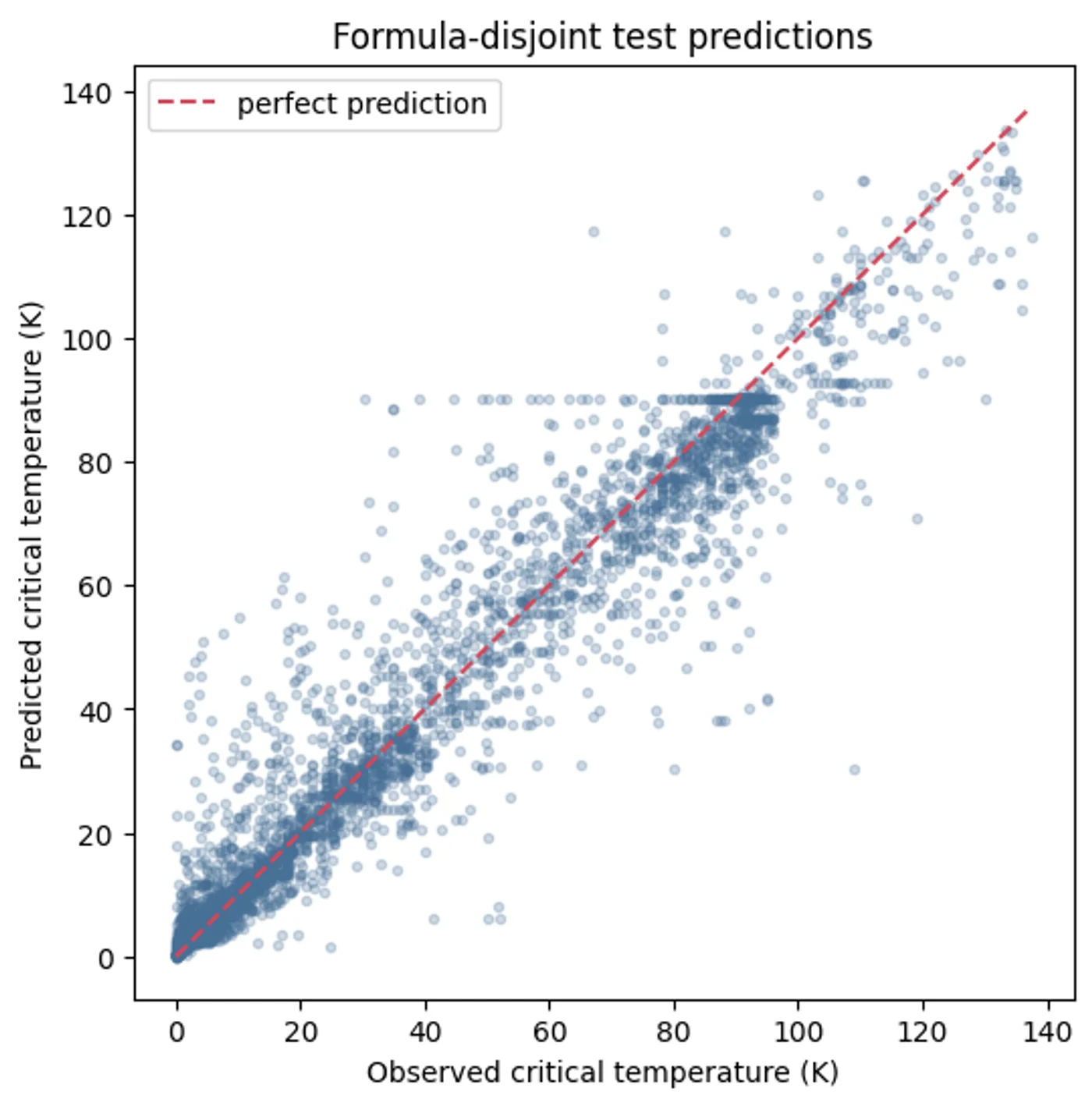
Test formulas are separate from training formulas. The model predicts temperature for known superconductors, not whether any material superconducts.
The evidence
Fig. 01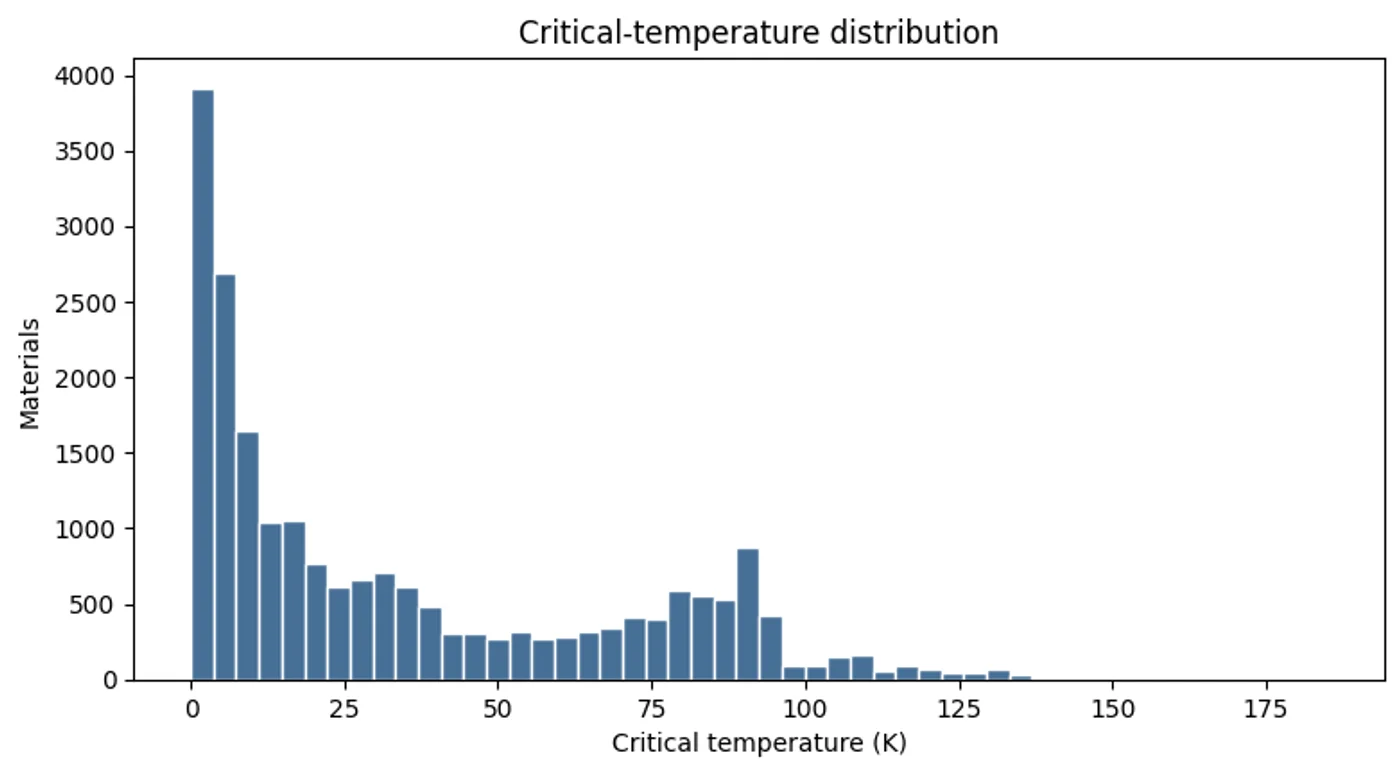
01 · Method and interpretation
A random forest predicts critical temperature for materials already known to be superconductors from 81 composition-derived features in the UCI archive. Exact chemical formulas are kept on only one side of the train/test boundary, correlation pruning is learned from training data, and hyperparameters are selected with grouped cross-validation. On one untouched formula-disjoint fold the model reaches R² 0.933, RMSE 9.08 K, and MAE 5.23 K; it does not determine whether an arbitrary material superconducts.
02 · Supporting figures
Selected outputs from the complete notebook.